PHILIPPINES
TRIP REPORT
- SEPTEMBER 12-26, 2026 (Dumaguete and Atlantis Infiniti)
(Click here to see
some pictures from
this trip plus links to the SmugMug slideshow.)
Part of my job as a trip leader is dealing with the various logistics of
putting together group trips and this one certainly had its share of
challenges . . .
We have just returned from our two-week adventure in the Philippines,
spending the first week on land at Atlantis Resort Dumaguete and the
second week on their liveaboard Infiniti, exploring the various
areas around the Western Visayas, specifically encompassing the Cebu,
Bohol, Leyete, and Malapascua Island areas.

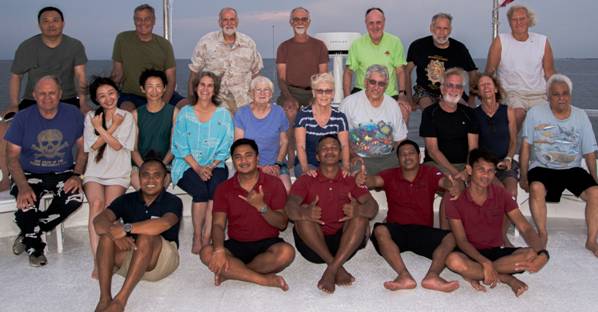
We started as 19 strong for the trip, and it seemed like we were
traveling on 19 different itineraries. The group initially consisted of
(in no particular order) Tony Mischel, David Mischel, Glenn Suhd, Glenn
Heins, Bill & Susan Patrolia, Kirk & Leigh Dean, Michelle Leonard, Patti
Wey, Stacey Carr, Don Banas & Mary Raske, Paul “Doc” Anes, Shirley
Parry, Tom & Bobbie Beuthin, Marilyn Lawrence, and me (Ken Kurtis). Mary
was only doing the first week and Marilyn was only doing the second week
so our total group size was actually maxxed at 18. However . . .
A few days before the trip started, both Tony Mischel and Susan Patrolia had to drop out. And while we were on the trip, some nasty URI (Upper Respiratory Illness) spread through half the group to varying degrees but got so bad with Michelle and Stacey that each of them decided they were too sick to do the boat portion and both went home a week early.
Their collective experience underscores the value and wisdom of having trip insurance, especially when you consider that this was a $6,500 trip (not counting the airfare). In fact, Stacey and Michelle were able to confer with their respective insurance companies while trying to decide whether or not to continue the trip, to make sure they would be covered and to see what documentation the insurance companies might need when they submit their claim.
Travel insurance generally runs 5-10% of the cost of a trip (depending on a number of variables) and is a good investment should something go awry. I think Stacey went through Seven Seas and Michelle went through DAN but you can shop policies through the website www.insuremytrip.com which is a clearinghouse for various providers.
You may also find you have coverage through your credit card company if you paid for part or the entire trip that way. On all Reef Seekers trips, the prices we quote are cash/check. We’re happy to take a credit card payment but we add 4% to that payment as that’s what we lose to our credit card processing company (Square). The point is that if you pay us with a credit card, and your card company includes trip insurance, you may be getting that coverage for 4% of the trip cost rather than 5-10%. Something to think about.
On with the details of the trip . . .
As I mentioned above, this was a two-week trip, all with Atlantis, with the first week being land-based and the second week being boat-based. We can’t say enough good things about the Atlantis staff, both at the resort and on the boat. From the dive guides to the wait staff to the housekeepers to the administrative folks and everyone else, they are doing everything they can to give you a top-notch experience and vacation.
When we go on any trip, not just this one, there are certain things that are out of our control. We can’t determine what animals you’ll see, we can’t control the diving conditions, and we can’t control the weather. But what IS within our purview is the overall composition of the group (this group got along together especially well) and the attitude and attentiveness of the resort or boat staff. Also first class. So even if we didn’t see a Mimic Octopus (came close) or some of the dive sites weren’t quite up to snuff (more on that later) or the weather gives us problems, the attitude of the group and the staff can be a very strong counter-force to any of that. And when you put that all together, that means it’s almost impossible to have a “bad” trip.
I’ve been to Atlantis Dumaguete before, in 2020 and 2024. Manila is the central starting point for these trips, so that’s where you fly into. To put it simply, the Manila Airport is a mess. There are only three public terminals (terminal 4 is defunct and not used). They’re spread out and it can take an hour to get from one terminal to another. That can be an issue because international flights land at T1 and T3 but domestic flights leave from T2.
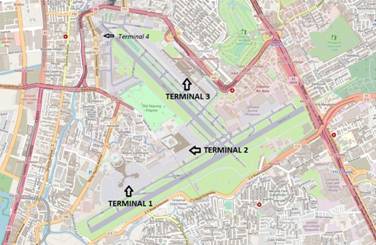
Not to worry because Atlantis staff was there to meet each of our
in-coming flights and personally drive us to our connecting terminal.
That really saved a lot of of headache and hassle for everyone. This is
part of the service they provide when they book the domestic
(Manila-Dumaguete) portion of your trip. So we all flew into Manila
(some landing at T1, some at T3) and they took it from there. From a
group standpoint, it added about $20/person to the overall cost but IMHO
was worth everyone penny of it. (They did the same meet-and-greet and
escort to the connecting terminal on the return flights as well.) So if
you’re booking a group or even on your own, allow them to handle the
domestic portion.
The Philippines consists of over 7,000 islands. Dumaguete proper is in
southern Philippines, just north of the island Mindanao, and is roughly
a 90-minute flight from Manila. So no matter where you are in the world,
it shouldn’t be too difficult to get to Manila and then fly to Dumaguete
(airport code is DGT). The resort’s actually in Dauin, not Dumaguete
itself, which is about a 40-minute drive from the airport. The resort
staff meets you at the airport, tags your bags, loads you into a van,
and off you go. It was quick, painless, and efficient.
Atlantis Dumaguete is quite nice and secluded. Once you turn off the
main drag and go down a long winding road, you find yourself in what
could be called a tropical oasis. Lots of trees and lots of birds
chirping. The resort is laid out along a central pathway that leads down
to the main office, dive shop, restaurant, camera room, and the
shoreline where you get the boats.
We were escorted into the open-air (but fully covered) restaurant area where we were given a welcome drink, short shoulder massage (they’ve got a spa on-site), and general orientation, as well as paperwork to complete. While we were doing that, our bags were being delivered to our respective rooms.
There are four room types: Deluxe, Garden Suite, Ocean Front, and Premier. When I was there in 2020, we stayed in a Garden Suite, which was really nice and fairly big with a king-size bed, a work table, a sofa, large bathroom, and good-sized front patio. In 2024, I was in a Deluxe room which also had a king-size bed but was a bit smaller, had a small-ish work table jammed into a front corner of the room, and small patio. This is what we had booked everyone in for this trip. One issue with these rooms is that there’s very little storage area for clothes. There was a closet with a couple of shelves and that was it. Two people in this room might have to live out of their suitcases somewhat.
I’d suggest you splurge and get a Garden Suite room, which has a bit more space. For this trip, I was given what I assume was a Premier room (#36) which was huge, had plenty of storage, and even had a small patio/sitting are in the front. Very nice.
All of the food is included when you stay here and not only is it very good, but the food was very artfully presented as well. For breakfast you ordered off of a menu and could get pretty much anything you wanted. For both lunch and dinner, you order from your table off of their blackboard menu which is visible right when you walk in and lists the starter soup or salad, choices for the main (usually three or four options), and dessert choices. Lunch is on the left side and dinner is on the right. Menu options change every day and there’s something there for everyone’s palate (including vegetarian and vegan options) plus they can accommodate specific needs. All meals are wait-staff served and there are numerous tables spread all around the restaurant so finding a place to sit isn’t an issue.
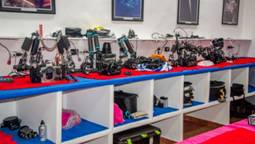
The camera room is also quite nice and roomy. It’s a climate-controlled
room (though we usually left the air-conditioning off) that has 21
individual camera stations with cubicles for storage, charging outlets
(both 110V and 220V – clearly labeled), work lights, and air guns for
drying.
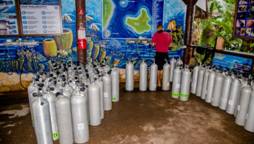
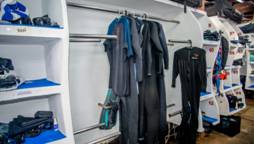
The “dive shop” is a large open-air area that has plenty of gear storage
areas (you’re assigned a dive cubby when you check in), separate rinse
tanks for cameras and dive gear, an analyzing station for nitrox tanks,
compressor whips for filling tanks (the staff does that, not you), a
large board indicating who is diving at what time on what boat and at
what dive site, and some benches and tables for pre-dive briefings and
between-dive snacks. It seems a bit chaotic at first glance but it
works, especially when you get into the rhythm of the resort.
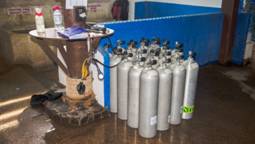
For those diving nitrox, you’re asked to analyze your own tanks and log
the results into a book as well as write the result on a tape label on
your tank. Regardless of how many dives you’re doing in a day – their
normal day is four dives plus a night dive – they ask you to only
analyze two tanks at a time so they don’t run out. All the full tanks
are next to the analyzers with valve caps on, plus each has a blank
piece of tape already in place. Over the course of our time there, I
think the lowest I got on a tank was 30.1% and the highest was 32.5%.
Most of the time the readings were between 31.0-32.0%. Fills on the
aluminum 80s were a pretty consistent 2,900-3,100psi.
One easily-solvable issue is that there are only two fixed whips set up to analyze tanks before your dive. If it’s crowded – the resort can accommodate up to 80 divers (there was another group of 20 there with us so “only” 36 divers total) – two whips aren’t enough. It would be very easy to add two or even four more whips for analyzing. I occasionally had to wait a couple of minutes for the analyzers to free up. (And yes, definitely a First World Problem).
Once your tank is analyzed and labeled, you move it over to the “active” area and the dive staff will then carry the tanks, along with all of your other gear, out to the appropriate boats. It’s a lot of schlepping for them – the first dives were at 8:30AM and by 7:30AM they were already loading gear – because they off-load your gear too, and it is all much appreciated.
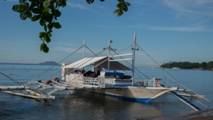
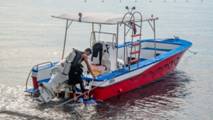
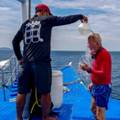
There were two styles of dive boats, large Philippine-style
dual-outrigger bangka boats which can easily accommodate 20 divers and
gear, and smaller boats (10’x25’) that comfortably accommodate six
divers. You do a giant stride to enter from the big boats and a backroll
to enter from the smaller/faster boats. At the end of the dive for both,
you take off your tank in the water, hand up your fins, and then come up
a ladder (and are promptly given a “baptism” – fresh water from a bucket
poured over your head). Our group dove a combination of both, and each
had advantages and disadvantages. The local dive sites are all no more
than a 10-minute run from Atlantis (some as close as two minutes –
literally) and both the smaller boats and the larger bangka boats were
comfortable.
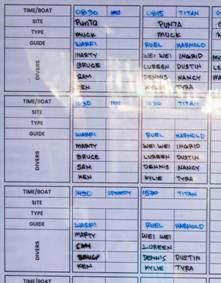
Dive times are listed as 8:30AM (we occasionally did the first dive at
8:00AM), 10:30AM, 2:00PM, 4:00PM, and 6:00PM. They ask for a maximum of
60 minutes bottom time. The boats come back to the resort after each
dive (although sometimes we did a 2-tank dive – it was clearly labeled
on the board), so you can easily skip one dive during the day without
having to forfeit all the other dives as well.
As I mentioned, all of the sites are close. Some sites have specific creatures to look for and others don’t. So a lot of times you could tell the guide you wanted to see some specific, and they’ll choose the site based on that request. There are 18 named spots close to the resort, 11 more at Apo Island, and 4 more at Siquijor. So you’ve got plenty to choose from and some sites you might want to visit twice, depending on if you found your sought-after creature or not (or got a good shot of it).
Overall, we really enjoyed the Dumaguete diving. Because it’s muck diving and close to shore, the viz was anywhere from 20-40 feet but that was OK because you’re moving very slowly and really paying attention to every inch of sand as you look for the elusive creatures that might be hiding from sight. Water temps on my gauge read 84-86º so quite comfy. I did all of the dives in a 1mm full suit with a 1mm hood. Others wore more, some people wore less.
But Dumaguete muck diving is slightly different because there are also
scattered corals reefs. Not necessarily at every dive site but at enough
that if you’re not finding what you’re looking for, there’s other stuff
to see.
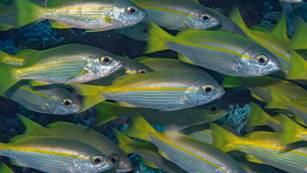
A spot called Sahara, which sounds like a desert, is actually an oasis because while you start in sand, there is a marvelous artificial reef there that is teeming with life. I think our primary target there was a Mantis Shrimp but we also got Porcelain Crabs, juvy Sweetlips, a couple of different kinds of Pufferfish, Sergeant Majors guarding egg nests, a couple of eels, and a juvy Longfin Batfish (which I got every excited about). Lots of stuff to see and photo.
But the overriding thing to remember when diving any muck area and looking for these hard-to-find creatures is that your success or failure is likely to be directly proportional to the skill of your dive guide. I’m pleased to say that the guides we used at Atlantis Dumaguete – Warfi, Cyrus, Alf, and Ruel – were all quite eagle-eyed. They showed us some things so small that even when they pointed at them, I’d go, “What? Where?”
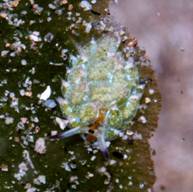
Probably the smallest thing we found – and there were a lot of them –
was a nudibranch called “Shaun the Sheep.” And when I say small, I’m
talking the size of a head of a pin. Thanks goodness Warfi has good
eyes. These guys are normally found on small green vegetation so Warfi
would point him out to me, show me which side the eyes were on, and then
I’d start firing and hope for the best. I’m certainly not going to claim
to have gotten the best shot of Shaun, but I got one that I’m pretty
happy with.
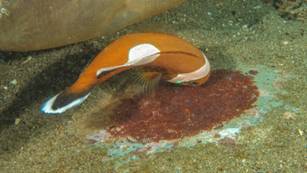
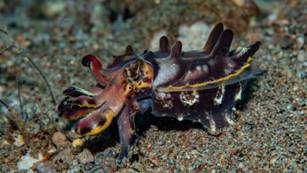
As I mentioned, Dumaguete is a great place for seeing rare or unusual
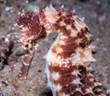
creatures. Some of what we saw in the dives we did included numerous
Frogfish, all kinds of Clownfish including some guarding eggs, Jawfish,
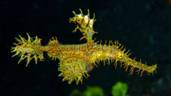
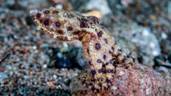
numerous Blue-Ring octos, Ghost Pipefish, mating Mandarinfish,
Flamboyant Cuttlefish, regular Cuttlefish, Snake Ells, Gardens Eels,
male Cardinalfish brooding eggs in their mouths, and a lot more. I think
the only one we missed was the Mimic Octopus. Cyrus kept spotting them,
but could never get them up out of the sand. You can see some of what I
experienced and shot on my SumgMug page:
https://kenkurtis.smugmug.com/DIVE-TRIP-PHOTOS-ALL/2026-DIVE-TRIPS/THE-PHILIPPINES-SEPTEMBER-12-26-2026
We also did a day trip on one of the bangka boats over to Apo Island, which is about eight miles away. The allure of Apo is that they have more traditional-type reefs as well as a lot of turtles. It was pleasant but I didn’t find it to be spectacular. That’s the same impression I’ve had the other two times I dove there. We did three dives at Apo (they cook a BBQ lunch on the bankga boat which was quite good) and saw a few turtles, some Scorpionfish, numerous Clownfish, and other reef regulars, but nothing all that unusual or special.
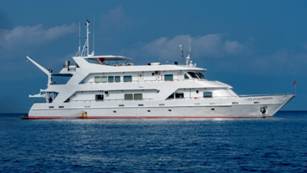
After six fun days diving in Dumaguete, Saturday (September 19) was our
transition day from land to boat. We actually did two more muck dives in
the morning, had lunch, and then packed everything up for a
late-afternoon move to the Atlantis Infiniti, to start the second
week of the trip. Although the boat can accommodate up to 22 divers, we
had our group of now 14 divers plus 3 non-Reef Seekers folks. And
because of our four divers who dropped out, it also meant that a number
of our people had a cabin to themselves.
The Infiniti is a four-deck vessel, 128 feet long and 26 feet wide with a general cruising speed of 8 knots. There all 11 cabins (mostly doubles but also three triples). The lower deck is all guest/crew cabins. The main deck (going front to back) is cabins, then the galley, and the dive deck. There are two more cabins (and the wheelhouse) on the upper/third deck as well as the camera room. The fourth deck is a spacious sun deck that also has some cover/shade.
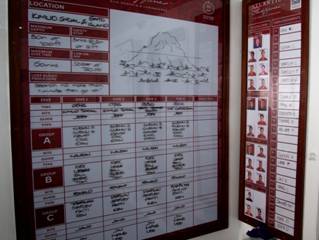
One nice touch on the dive deck are two information boards, the first of
which lists the dive sites planned for the day, time of the dives, and
who is diving with which guide in which group. Adjacent to that board is
a long skinny board that lists all the crew members with their picture
and main job assignment, as well as a list of all of the guests and
which cabin they were in. That made it easier to know who was who among
the crew, and where you could find a fellow diver if they were late for
a dive briefing or meal.
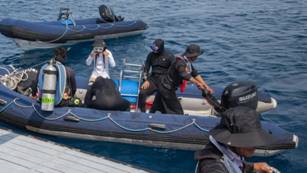
A few steps down from the back of the dive deck is a spacious
water-level dive assembly area, which is where we’d board the RIBs for
diving (Rigid Inflatable Boats), as well as rinse off post-dive (three
showers with nice, hot water). They would pre-load the tanks and camera
for whichever of our four groups (3-5 divers/group, each with a guide)
was ready to go. It was always a short run to the dive site, they’d help
you put your tank on, and then everyone would do a co-ordinated backroll
entry. They have three RIBs total so you’d always have one RIB on-site
and the other two running divers back and forth.
Again, we want to sing the praises of the Atlantis crew. There are 21 of them overall on the liveaboard and they work seamlessly and efficiently. Five of them greet you when the RIB returns from a dive with a hearty “Welcome back!!!” and then they help you off the RIB, take tanks up to the dive deck, help you off with wetsuits, and grab fins. They move so quickly that it almost always seemed like your tank was full and ready to go for the next dive by the time you got your wetsuit off. They also do a lot of double-duty. We had four dive guides (Jeff, Wilson, Jano, and Ronald) who also end up being galley staff during mealtimes.
The general sked was continental breakfast available at 6AM, first dive at 6:45AM, breakfast afterwards, next dive at 9:45AM, lunch around 11:30AM, third dive at 1:30 or 2:00PM, fourth dive at 4:00PM, and night dive at 6:00PM (not many people did that one). Dinner was around 6:30PM. Then we’d toddle off to our rooms and repeat the next day.
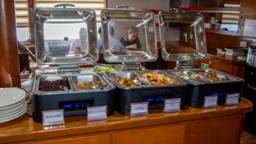
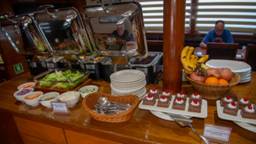
Like on land, the food on the boat was generally very good. For
breakfast, you ordered off a menu. Lunch was always a buffet, and when
you were done with lunch, you’d make your selections from the dinner
menu, which was always a served, plated meal. And as with the land
restaurant, the food was artfully presented as well. What was also nice
is that all drinks, including sodas and even alcohol, are included.
Tanks on the boat were all aluminum 80s and were generally filled from 2,900-3,100psi. The nitrox divers analyzed tanks before each dive and most of the time the reading were 31-32%. Only a few times did it dip below 31%. I think the lowest I ever got was 30.1%.
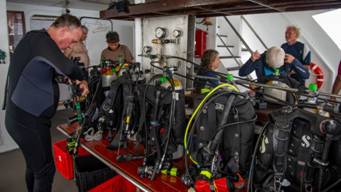
I had some issues with the physical layout of the boat. The dive deck
area is rather cramped, especially when everyone is there trying to get
ready. They solved that by rotating which of the four groups (A, B, C,
and D) went first each day and would ask the other two groups to wait.
But since you can’t go into the galley (adjacent to the dive deck) wet,
that meant the groups waiting would need to go upstairs to give the
first groups room. Not the end of the world, but not ideal.
I also wasn’t too nuts about the camera room being on an upper deck. It’s a spacious camera room with individual stations and charging areas for everyone. But if you want to work on your camera between dives – change batteries or a lens or whatever – you had to take it up one level. Then you had to bring it back down when it was time to dive. Again, not the end of the world but not ideal either.
As a trip leader, I’m always aware of the group dynamics that develop and one of the factors in that is whether or not there are convenient places for people to hang out and chat and bond. On Infiniti, it’s a bit difficult. The galley area isn’t too conducive or comfortable just to hang out in, the dive deck certainly isn’t, there’s a large open area outside the camera room that has potential but the layout makes it difficult, and not too many folks went all the way up to the sundeck. On top of that, there are a number of areas on the boat that are off-limits to the guests. So a lot of people found it easiest to hang out in their rooms between dives or meals. Again, not the end of the world but just something to be aware of, especially if you’re taking a group. Because we had the week on land prior to the boat, we’d established a fairly good group dynamic. But it’s something to be aware of.
As mentioned previously, we dove areas along Cebu, Bohal, Leyete, and Malapascua islands. With the exception of the Thresher Shark dive (more on that in a moment), the dives were somewhat ho-hum and not too impressive, both from reef structure and fish life standpoints. In fact, one recurring theme when we’d discuss things post-dive was “Where are the fish?” We didn’t see anything over eight inches long and even with smaller fish like Anthias or Sergeant Majors, where you’d expect to see hundreds of individuals, you’d see a dozen or so.
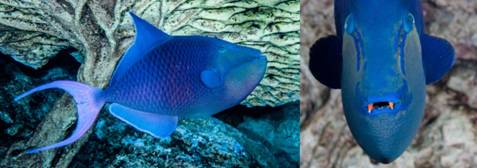
One thing I noticed was the absence of Red-Tooted Triggerfish. (Pix
above are aquarium shots.) These are the bluish-purple fish that are all
over the place when we’re diving areas like Manado, Indonesia, or Palau.
In those places, it’s not unusual to see thousands of these the fish
milling about of the reef or cavorting 30-40 feet off the reef into the
blue hoping to catch morsels in the current. Not here. I expected to see
them but did not. I’m not sure what that means other than that, to me,
Red-Toothed Triggers are an “indicator” species and their absence might
indicate other problems with the overall health of the reefs.
A caveat to remember here is that I missed the first 2.5 days of diving on the boat because I got that URI that was going around, but I’d still talk to people after dives to ask how it was and the accolades were few and far between. We thought we’d get some vertical walls like we do in Indonesia or vibrant coral formations like we do in Palau and those seemed to be absent. So on a 1-10 scale, our diving experience was maybe a 5. Enjoyable, but nothing to really write home about. And a number of the sites I did dive more resembled muck dives – sandy bottoms and maybe patchy corals – that full-on reef dives.
That being said, at the end of one of the dives I missed, I heard someone call out the two words that every diver hopes to hear: WHALE SHARK!
It seems about half the group had gotten a fleeting glimpse of a 15-foot Whale Shark just gliding down the reef. It was one of those things that if you didn't look up at the right time, you missed it. Don Banas got some video of it as it was passing him by so we have pictorial proof. And Whale Sharks are known to be in that general area because they actually feed them at Oslob on the island of Cebu.
And while that chance encounter with the ocean’s largest fish was certainly special, the highlight of this part of the trip was always going to be the Thresher Shark Dive and that absolutely did not disappoint.
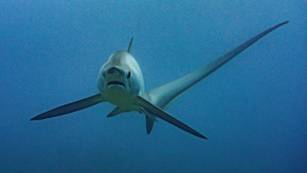
I had previously heard that this was a very early-morning dive (enter
the water at sunrise around 5:30AM) off the island of Malapascua, you
needed to be around 90 feet or so to see them, and that the sharks were
skittish and didn’t hang around much.
But in 2022, the sharks apparently decided to move – I haven’t seen any explanation as to why (maybe they didn’t like the early roll call) – and now they’re over at a place called Kimud Shoal, which is about five miles east of the previous site. The advantage here is that this reef is shallower – think of a fairly extensive flat reef about 30 feet deep where the sides then slope off into the depths – and the sharks seem to hang around all morning and even tolerate the presence of divers.
I had never seen a Thresher Shark. There are three species and the largest of them can be as much as 20 feet long. The ones we were expecting to see where more in the 10-12 foot range (called Bigeye Thresher – you can see why in the pix). They have exceptionally long tails, as much as half their body length, and they can whip that tail to stun fish that might be their prey. They’ve got very large black eyes because they spend most of their time in very deep waters but they come up shallow to be cleaned. And getting cleaned is why they come to at Kimud Shoal each day. (You can see three cleaner fish making a beeline for the shark in the pix below.)
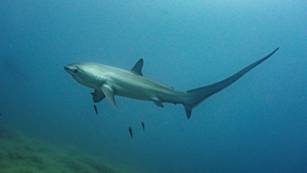
So I was very excited when we were the first group off the boat that
morning and dropped in. Our game plan was to meander around the reef to
and move toward the sloping edge and then to follow the edge around and
what what’s what. I’d like to say we saw a Thresher immediately but,
according to the timestamps on my images, it took us about 10 minutes
before we spotted the first one, and even that was only a glance as the
shark continued on its way and out of sight.
But it only got better from there.
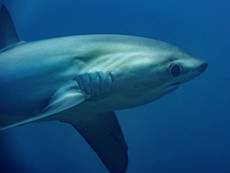
A best I can tell, and I’m sure this is simply luck-of-the-draw or being
in the right-place-at-the-right-time, it seems our group had more
encounters than the other groups did. Anytime we’d see one, we’d stop
and hold position until the shark moved away, and then we’d continue
further along the reef. Whether that was the “winning” strategy or not,
it certainly worked for us. Over the course of our dive, we easily had
five or six separate encounters, some longer than others, and each time
a shark would glide by, you’d see the smaller reef fish swim up and give
the shark a good cleaning. We ended the dive with a trio of Threshers
meandering around as we did our safety stop. Very cool dive.
Amazingly, our second jump was even better than the first (which was pretty good).
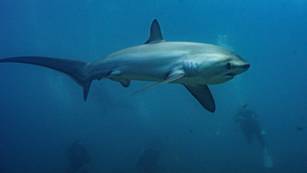
Since I took the Nikon still camera on the first dive, I figured I’d
take the GoPro cam on the second dive to get some video. And that proved
quite fortuitous. Because about 15 minutes into the dive, we had a
single Thresher come on by and pass through our little group. But he
hung around, weaving in and out and getting cleaned, and maybe just
trying to figure out what we were, for almost three minutes. I was able
to shoot it all and I put it together in a small video that will give
you an idea of what we experienced (make sure you have your speakers
on):
https://youtu.be/o0sy9iORLcE
Overall, despite the illnesses that ran through our group, and despite the myriad of camera issues that seemed to plague me personally, it was a really nice trip. Would we dive Dumaguete again? Absolutely. It’s a fascinating place to find some of the creatures on your hard-to-find-critters bucket list. Would we do the Infiniti again? Probably, but I don’t know if I’d do the same itinerary. By the same token, their other routes don’t include the Threshers so maybe the solution is that same route but work harder to find better reefs on the non-Thresher dives. Would we dive with Atlantis again? Absolutely. And you should too.
See the pix on the SmugMug photo page:
https://kenkurtis.smugmug.com/DIVE-TRIP-PHOTOS-ALL/2026-DIVE-TRIPS/THE-PHILIPPINES-SEPTEMBER-12-26-2026
 |
 © 2026 Reef Seekers Dive Co. All Rights Reserved. |